
I don’t mean to talk to Carly Rae Jepsen about my break-up but I do it anyway. It’s late August and we’re on a Zoom call, with Jepsen at home, her cantaloupe-coloured hair radiant in the sunshine, and I’m in mine with the piles of whatever my home used to be in boxes tucked out of view. We’re talking about her delicious sixth studio album, Day and Night. It’s her first in over four years, but it really feels more like six, she corrects with a bright smile.
The story of my heartbreak tumbles out partway through our conversation, and Jepsen, with real generosity, patiently listens as I tell her how I fell in love with someone when E•MO•TION was released and now nurse a bruised heart listening to Day and Night at the end of that same relationship. It’s a strange sort of bookend to have, but music, as ever, is one of the best markers for time and memory.
“If you live your whole life and you haven’t been heartbroken, then you’re not going to be able to relate to people because everyone’s been heartbroken,” she responds, plainly, so easily, as though this really is one of the best and worst kept secrets for how to be a person.
But then—as if she knows exactly what I need to hear—Jepsen says: “I’m not saying your experience right now is not huge and terrible. It’s the worst thing in the world, but it is nice to know it’s a part of being alive. You know what I mean?”
I wouldn’t expect anything but this sentiment from such a seasoned traveler of matters of the heart. Jepsen’s pop songs are embellished and imaginative external creations of her inner world and experiences—good, bad, ugly, extraordinary—but they are grounded in the reality of what it all actually feels like. That’s what makes her work evocative and alive. It’s probably why I feel comfortable (maybe too comfortable) telling her about my heartache because she gets it as a certified music nerd who uses musical art to help her understand her feelings, too.
“I feel grateful for the outlet of music because, if I didn’t have that, I might implode,” she says. “I’m hoping that if people are connecting to [my] music, it’s allowing them to go to that place, too. Because I need it personally.”
“We all need a place to go to feel our feelings.”
What a selection of feelings for listeners of Day and Night. It’s luxurious to experience this double album knowing it was crafted to take up that much space. After all, ours is a time when attention is short, and something called friction-maxxing—which seems to be just doing anything for longer than a handful of seconds?—is a real concept people try to put into practice. The 24 songs on Day and Night unfurl into something of a sonic scrapbook of falling in love, wanting to have a family, how heartbreak may never leave and simply grow with you, and, as ever, a good old-fashioned yearning.
A double album wasn’t intentional but eventually became purposeful when it revealed itself as such. There was no specific start date for writing on this project because Jepsen had been jotting down ideas, melodies, and lyrics since The Loneliest Time. (Her only real deadlines formed when she was pregnant, she added.)
“My desire to write and make [music] is a continual thing. It’s not really like, ‘Oh, when is the album due? I better get back to the studio and start.’ I’m constantly making things.”

Carly Rae Jepsen. Photo by Vince Aung.
Jepsen tells me in these years she has lived. I mean, really lived. She began dating her now husband, Cole Mardsen Greif-Neill, known as Cole M.G.N., a music producer and writer who has worked with Blood Orange’s Dev Hynes, Beck, Jenny Lewis, Julia Holter, and many, many more. He’s also a key collaborator on Day and Night, as well as the direct muse for many of the songs. Coupling up with her would-be husband, who was a friend before any romantic thoughts ever entered the chat, changed her whole life, Jepsen says.
“I had gone through enough things in my life and realized I needed to change. I wanted a different thing than what I was currently in, which was a workaholic, constant go-go state. I was craving some balance. When you tell me I lived, I chuckled because I’m like, ‘No, I really did.’”
Jepsen travelled the world, ate some really good food (look to the album rollout for inspiration), got engaged, got married, had a baby—all hallmarks of a period of a transformation. This space to just be led her back to what her career was all about in the first place.
“I began making music again like how it was when I started: for the joy of it. I don’t know where I’m going but I’m making some psychedelic folk, or I don’t know what I’m doing but I’m making some house music that’s dance-y. There was no thought of ‘Will this work? What’s this for?’ I chased what I was attracted to, and—I know this sounds cheesy—but [it was] feeding my soul a little.”
Jepsen is something of a pop veteran now. For instance, “Call Me Maybe” will be 15 years old this month. And while you consider time, and its subsequent fakeness, what arrived for the pop star was confidence in her craft and taste, which can only come from doing this for as long as she has. Someone once asked her if she was making music she wanted to listen to, which seems to have given her permission to, as she says, “land on a little planet” with her collaborators. “The indulgence of being in the game for as long as we have is we can go exploring together.”
Day and Night had the risk of seeming cluttered, which is something Jepsen was willing to do. (I don’t get that sense on my own listen.) In press materials, Day has been categorized as psychedelic folk, soft and a little whimsical, while Night is bombastic, synth-driven, and meant for the dance floor. There are propulsive tracks on Day such as “Versailles” (a personal favourite, and hopefully a favourite among Jepsen’s die-hards if they can embrace the beat switch) and “Burning Heart,” which she brought the saxophone back for, thankfully. Tender, loving tracks, such as the guitar-forward “Wild Child” and “Just a Little Walk on the Moon,” exist near “Good Fine Alright,” a song about pretending to feel normal after a break-up, which sent me into a state of despair.
Few ‘80s synth elements appear on Day and Night because she explored much of that on E•MO•TION. But Night certainly has a vibe, which you’ll find on “Diver” and “Amalfi Coast,” as well as bangers like the ABBA-inspired “Don’t Leave Me On The Dance Floor,” which reads to me as one of her saddest songs to date, and even weirder tracks (her words, not mine) like the album closer, “Super Sage.”
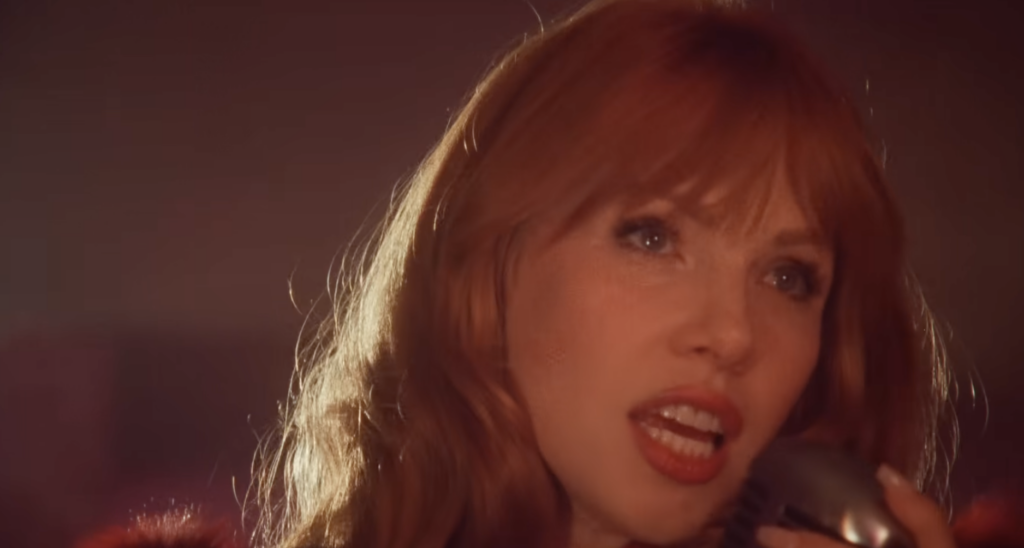
“Don’t Leave Me On the Dance Floor” video. Click to watch.
“I didn’t want Day to be one note where we’re like, ‘Okay, this is dreamy and chill, and then Night is dance-y and hype,’” she explains. “The main thing is Day had real instruments. There was some organic, folk songwriter stuff influenced inside of the pop music. Night is still a pop album, but it can explore house, it can explore dance. It’s not an 11 out of 11 for energy. There can be softer moments with reflection. I wanted there to be moments where I go on an adventure.”
Jepsen’s collaborators on Day and Night included the usual suspects such as Tavish Crowe, the most enduring creative partnership in her career. Kyle Shearer and Nate Cyphert are also everywhere on this album. She worked on it in L.A., New York, London, and Sweden with John Hill, Patrik Berger, Magnus Lidehäll, Noonie Bao, Vincent Pontare, to name a few, and, of course, her husband. If new people were added to sessions, she says, they would have been vetted by her other longtime collaborators. She didn’t want to prove anything to anyone, she explains, and tried to be as free as possible. That freedom included playlists as inspiration that raised eyebrows.
Jepsen won’t reveal what was on those playlists, which I get because they can be like the sonic version of a diary entry no one is meant to read, but I am still, even at the time of writing, endlessly curious about what’s there. Some of her collaborators—until they got what she was trying to do—were confused by the songs, taking it more literal instead of, I assume, spiritually or energetically as what she was aspiring for. But Jepsen offers up some names such as Blossom Dearie, Minnie Ripperton, and Dijon, the latter as an example of a contemporary artist doing something, she says, “that’s pushing the boundaries of what pop music” can be, something I am sure she considers on every project, but really did with Day and Night.
“What is pop music?” she asks. “What kind of pop music do I like? And what do I have to contribute to it? It’s a love/hate genre. There’s some pop music I loathe and then there’s some pop music I would die for.”
If there is one thread throughout this record, it is of domestic bliss. “After All” and “Habits of Creatures” seem, at least to me, the thesis for this period of her career and life. Jepsen will be 41 in November, she’s married, and she’s a mom to her son, Ilya, who isn’t even a year-old yet. She is—and I hope I’m not presuming too much because we’re actual strangers to each other—happiest in her little family unit. She gushes about her husband’s accomplishments, the Grammys he has, and how talented he is, tells me he understands her “weird,” which is to say that perhaps someone out of the industry wouldn’t get a Voice Memo going for a melody she shouts out across the room. Marriage and motherhood weren’t things she dreamed of or planned for, she says, but envisioning anything else now doesn’t seem possible. On one of the couple’s first dates postpartum, she says they spent their dinner talking about which Beatles album is their favourite. She literally beams telling me this, and joy arises in me for how good it feels to be that deeply known and loved by someone.
“I was excited about building a world that was dreamy and a romantic, poetic version of life in domestic bliss. Those ideas seem very opposite: that you could have domestic bliss and it’s romantic was an idea I don’t see a lot of,” she says. “It excited me so much. I don’t want to get married and then have the love burn out. I want to keep creativity and excitement alive. I want to have a baby and still have spontaneity,” though she adds with that specific Mom Tone, “which is harder than it sounds.”
Near the end of our call, I look at a tarot card on my desk. It’s the Ten of Cups, which depicts a rainbow and ten golden cups nestled between colourful arcs in the sky. Below are two children dancing and two adults, linked together, with their arms open. It’s jubilant, on the surface, and it reminds me of Jepsen’s pop music.
If you’re not inclined to tarot, let me briefly say these cards tell a story from one to ten, page to king, across four suits, and several archetypes in 78 cards. The cups suit is water, the domain of emotions. The Ten of Cups is the end of the story, or journey, across the other cards that depict varying degrees of happiness, despair, hard decisions, and over-extending—emotionally speaking. So, this card may look celebratory but I understand it as a spectrum of going through and holding every feeling, all at once, which is how I understand Jepsen as a pop singer and writer.
Jessica Dore writes in her book Tarot for Change about the card, “Imagine trying to look at a rainbow and not wanting to see the colour green. You’d have to close your eyes entirely, so you miss out on the rest.” Jepsen doesn’t miss out on the rest, and even goes further in her songwriting. She, as critic Hanif Abdurraqib writes of Jepsen’s work in his book of essays, They Can’t Kill Us Until They Kills Us, unlocks “the hard door, the one with the other feelings behind it.” One cannot exist without those other feelings in the telling of their story. While Day and Night in many ways is a tribute to a blissful partnership, it’s also an album of what it took to get there, and the sounds that best fit alongside those stories.
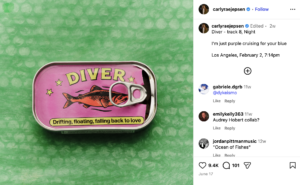
Instagram / @carlyraejepsen
Perhaps this is why Jepsen has endured for so long and has such loyalty among her fans. The songs she’s made over her nearly 20-year career are beautiful bangers that give permission to not miss out on anything. We’ve yearned together, felt the explosive joy of maybe getting that phone call, or concealed the pain of heartache for the sake of being good, fine, and alright for everyone else. They’re her stories but ours, too.
Jepsen has such a deep understanding of the pop songwriting craft while refusing to stay boxed into a specific sound. This is potent—in a good way. She prefers to explore and experiment, pulling threads from work she loves to make something that is fresh and welcoming, pairing that with her natural curiosity and observation of the human condition, which includes herself.
“I’m really excited about these two worlds of music, sonically, and want to play within them, while feeling confident as a writer that I could do that. I didn’t want it to be like, ‘Here’s just a love album.’ I wanted it to be all the flavours, so that it could be yours, so it could be mine, so it could be for any sort of feeling,” she says.
“I think the most important thing is that I wasn’t writing about something I hadn’t felt before. As long as there’s some honesty to it, then I think you can kind of let your imagination run wild a little bit.”